- Today
The 3 Kettlebell Movements Every Former Athlete Over 35 Should Master
- Coach Cambio
- Athletic Longevity
- 0 comments
If you played sports growing up, you probably remember training for more than appearance. You trained to move faster, hit harder, jump higher, and stay in the game. That mindset doesn't have to disappear after 35.
One of the most useful tools I've found for keeping athletic strength and power in my training is the kettlebell. But you don't need fifty different exercises. Start by learning three movements well: the swing, the clean, and the snatch.
These aren't three random tricks. They're a progression. Each builds on the hip hinge and teaches you to transfer power through your body.
1. The swing: build the engine
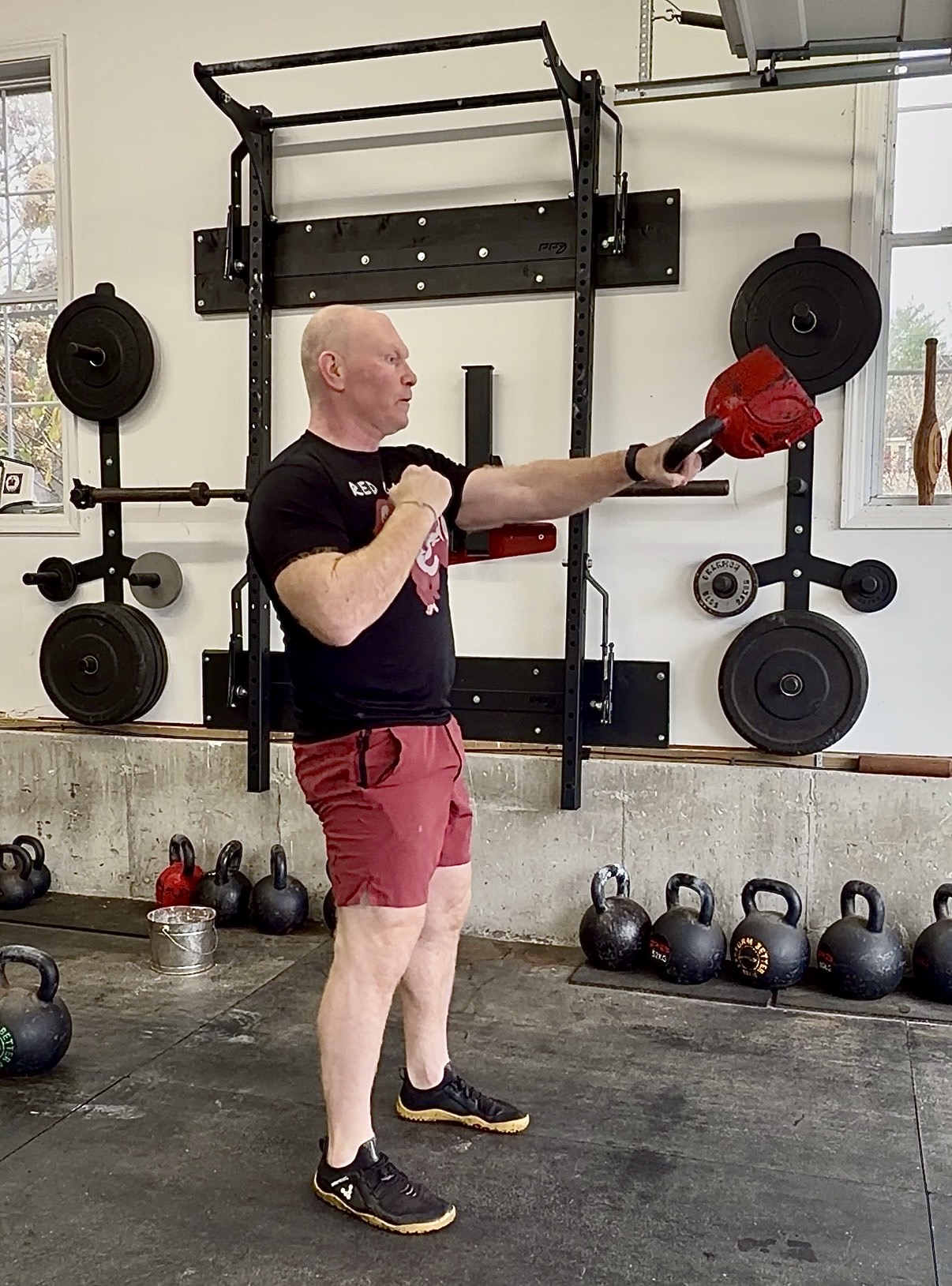
The two-handed swing is where I start. It's an explosive hip hinge, not a squat and definitely not a front raise.
Hike the kettlebell back, keep your torso braced, and drive through the floor to extend your hips. Your arms guide the bell; they don't lift it. At the top, stand tall without leaning backward.
Why it matters: Swings develop a powerful hip-extension pattern and train you to produce force repeatedly. That can support the strength and athletic qualities you use for sprinting, jumping, hiking, and everyday movement—though swings alone won't replace practicing those activities.
Coaching cue: Hike, snap, float. If you're pulling the bell up with your shoulders, revisit the hinge.
Starting point: Learn kettlebell deadlifts first. When your hinge is consistent, practice short sets of five two-handed swings with plenty of rest. Your next progression is the single-arm swing—learn to maintain a strong hinge and resist unwanted rotation before moving on to cleans.
2. The clean: connect your hips to your upper body
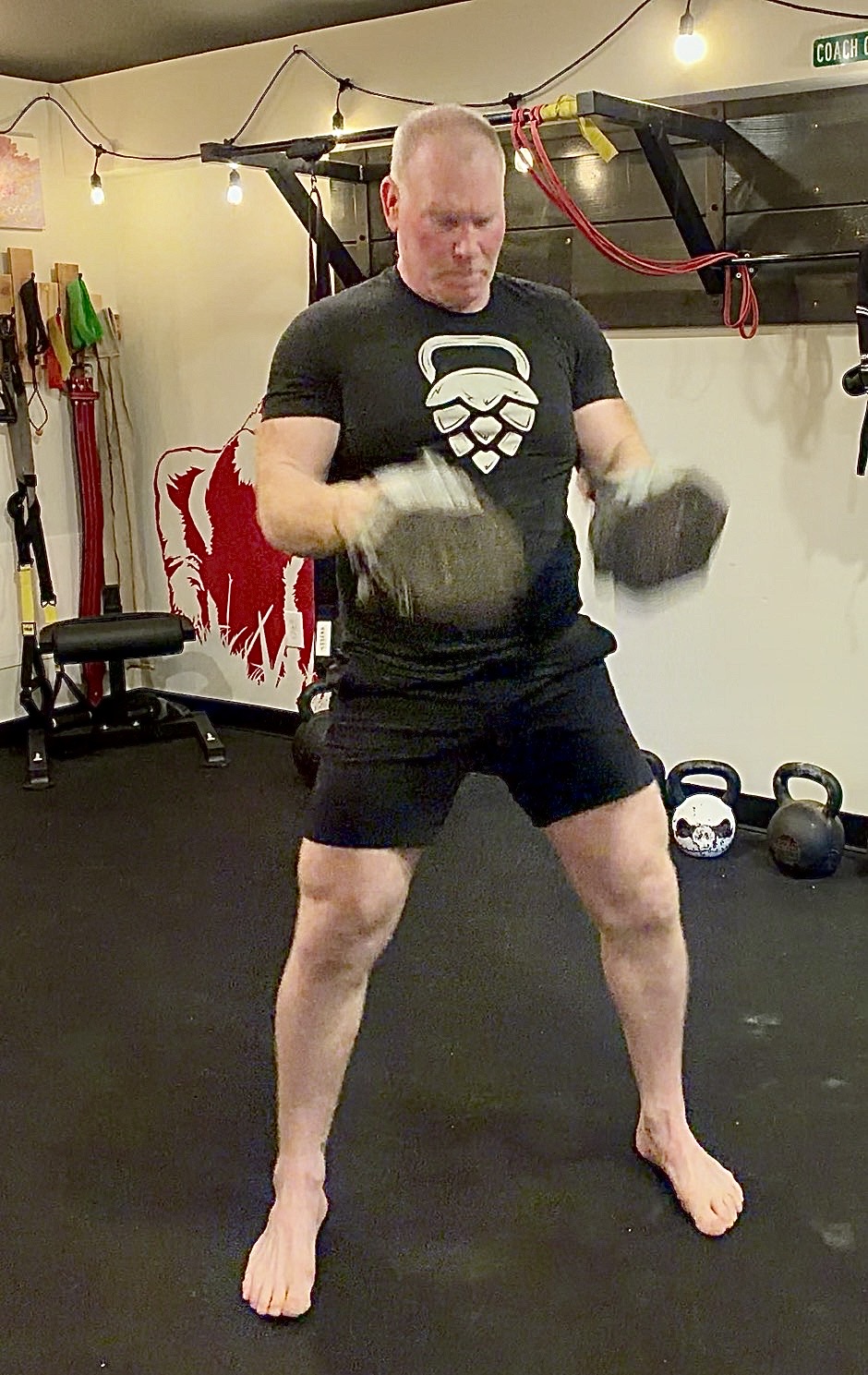
The clean builds on the swing's explosive hip drive, but the kettlebell finishes in the rack position instead of floating out in front.
The trick isn't to swing harder or curl the bell. Keep it close, drive your elbow back as the bell rises, and guide your hand around the handle so the bell wraps smoothly into the rack. A clean should land quietly against your forearm—not crash into it.
Why it matters: The clean connects lower-body power to a stable upper-body position. It's also the gateway to front squats, presses, and loaded complexes.
Coaching cue: Drive the elbow back, then guide the bell into the rack. Keep it close rather than letting it arc out and crash into your forearm.
Starting point: Own the one-arm swing and practice the rack position before adding repeated cleans. Start light enough to control the catch.
3. The snatch: express power with control
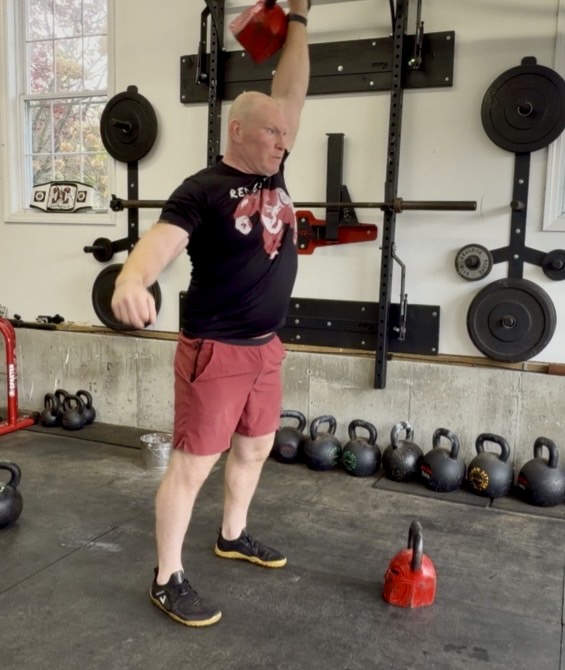
The snatch takes the same hip-powered foundation overhead in one fluid movement. It's the most technically demanding of the three, which is why I don't teach it first.
A good snatch isn't a giant shoulder pull. The hips launch the bell, the arm guides its path, and the hand inserts smoothly so the kettlebell settles overhead without slamming the forearm.
Why it matters: The snatch challenges coordination, overhead stability, grip, and the ability to generate power. It's a skill to earn, not a move to rush.
Coaching cue: Drive with the hips; finish with control.
Starting point: Become comfortable with swings, one-arm swings, cleans, and appropriate overhead mobility and stability work first. If overhead movement is painful or restricted, use another exercise and get individualized guidance.
How I'd put the three together
Don't turn your first practice into a ten-minute race. Technique comes before fatigue. After a dynamic warm-up, try this skill-focused session if you're already competent in all three movements:
Two-handed swings: 3 sets of 5 crisp reps.
Single-arm cleans: 3 sets of 3 reps per side.
Single-arm snatches: 3 sets of 3 reps per side, only if your overhead technique is reliable.
Rest enough between sets to keep every rep sharp. If you're learning, spend the entire session on deadlifts and swings instead. There's no prize for rushing the progression.
Train like an athlete, for life
At 53, I still want my training to carry over to the things I love: competing, playing basketball, and tackling the mountains of New Hampshire. That doesn't mean training exactly like I did at 23. It means mastering the fundamentals, respecting recovery, and keeping strength and power in the program.
You don't need an endless exercise library. You need a few movements you can perform exceptionally well—and a reason to keep practicing them.
Ready to learn the three movements? Start with The Big Three: Kettlebell Foundations. It's the natural first step for building your swing, clean, and snatch skills with a structured progression.
Already own the Big Three? If you can perform all three confidently and consistently, progress to the FaB FiVe Kettlebell Course to expand your skills and build a more complete kettlebell strength practice.
Coach Cambio 🦍
Don't just get older. Get stronger.