- Nov 16
The 10-Minute Strength Revolution: Why Less Time Doesn't Mean Less Results
- Coach Cambio
- QUICK Strength Workouts
- 0 comments
I had ten minutes before I needed to leave for a football game.
I had two choices: scroll on my phone or do some deadlifts.
I chose deadlifts.
Nothing fancy. Just a barbell, ten minutes, and a plan: 10–8–6–4–2 repetitions, one set every two minutes, adding weight as I went. Thirty total repetitions. Ten minutes of lifting. Done. Then I headed to the football game.
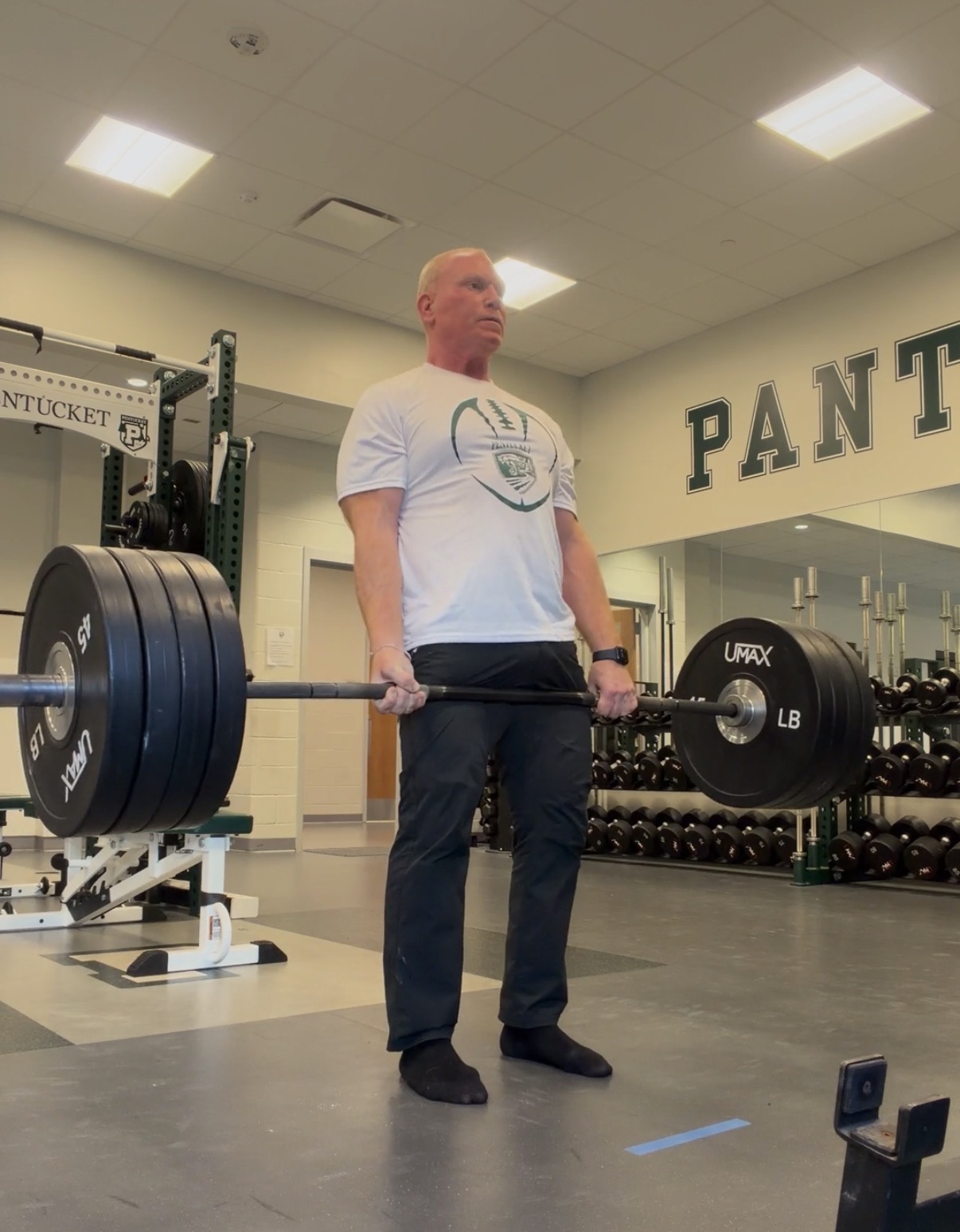
Some days I have an hour to train. Other days, I have ten minutes. Sometimes I squeeze in several little doses of strength throughout the day.
I call these microdoses of strength.
You don't always need more time. You need to make better use of the time you have.
What Does Science Say About Short Strength Workouts?
One misconception in fitness is that a workout must last 45–60 minutes to produce meaningful results.
Research on resistance training suggests that relatively small amounts of properly programmed strength work can improve muscular strength. A meta-analysis by Ralston and colleagues (2017) examined weekly set volume and strength gains. Higher volumes can yield additional gains, but lower-volume training can still be productive.
More training may produce greater results, but less training doesn't automatically mean no results.
Research on training frequency also suggests that when total weekly volume is matched, spreading training across more sessions does not necessarily produce greater strength gains. What matters is the total quality work, appropriate effort, progression, and recovery.
That doesn't mean ten minutes of random exercise will magically make you stronger. But a ten-minute workout performed consistently can be more valuable than an hour-long workout you never do.
What I've Seen as a Strength Coach
Science gives us a foundation. Coaching lets us see how those principles work in the real world.
One example I use with athletes is our 10-Minute Bench Press Challenge.
We load the bar to approximately 65–70% of the athlete's bodyweight and perform ten repetitions every minute, on the minute, for ten minutes. That's potentially 100 repetitions in ten minutes.
Sometimes we simply throw the challenge into training. When athletes return to it consistently, even once a week, I've seen noticeable strength gains over time.
The workout isn't complicated. It's the consistency of the training stimulus that makes the difference.
An important distinction: 65–70% of bodyweight is not 65–70% of a one-rep maximum. This is a demanding protocol, not a universal prescription. Warm up, use a spotter or appropriate safeties, and scale the weight or repetitions to maintain technique.
The objective isn't to survive ten minutes. It's to accumulate productive work.
Microdosing Strength: Small Sessions, Big Potential
People often believe they need an uninterrupted hour. When their schedules get busy, they skip training altogether. One missed day becomes three, then a week.
I prefer a different approach: if you've got ten minutes, use them.
That might mean a few sets of deadlifts, kettlebell swings, presses, squats, or pull-ups. It doesn't have to be a complete training session. It just has to be purposeful.
Strength adaptations depend on the training stimulus accumulated over time, along with recovery and progression. Short sessions help fit that work into a busy life.
Ten minutes isn't enough for every goal. Maximizing strength, muscle growth, or athletic performance may require longer sessions and more total volume. But when the alternative is doing nothing, those ten minutes matter.
For former athletes over 35, this is an important mindset shift. We still want to be strong, powerful, and athletic. We just need to fit training into our lives.
Three Ways to Build Strength in Ten Minutes
These are ten-minute workouts, but that doesn't necessarily mean ten minutes from start to finish.
Sometimes the warm-up is built right into the workout, like the first two sets of the deadlift ladder. Other times, spending an extra five minutes preparing your body makes sense.
The key is to be smart with your time. Adjust the weight, repetitions, and rest periods to match your ability and how you're feeling that day.
1. The 10-Minute Deadlift Ladder
10–8–6–4–2 repetitions. Start a set every two minutes. Increase weight as reps decrease, provided technique stays solid. Warm up appropriately beforehand. The goal is quality repetitions, not grinding through fatigue.
2. The 10-Minute Kettlebell Swing
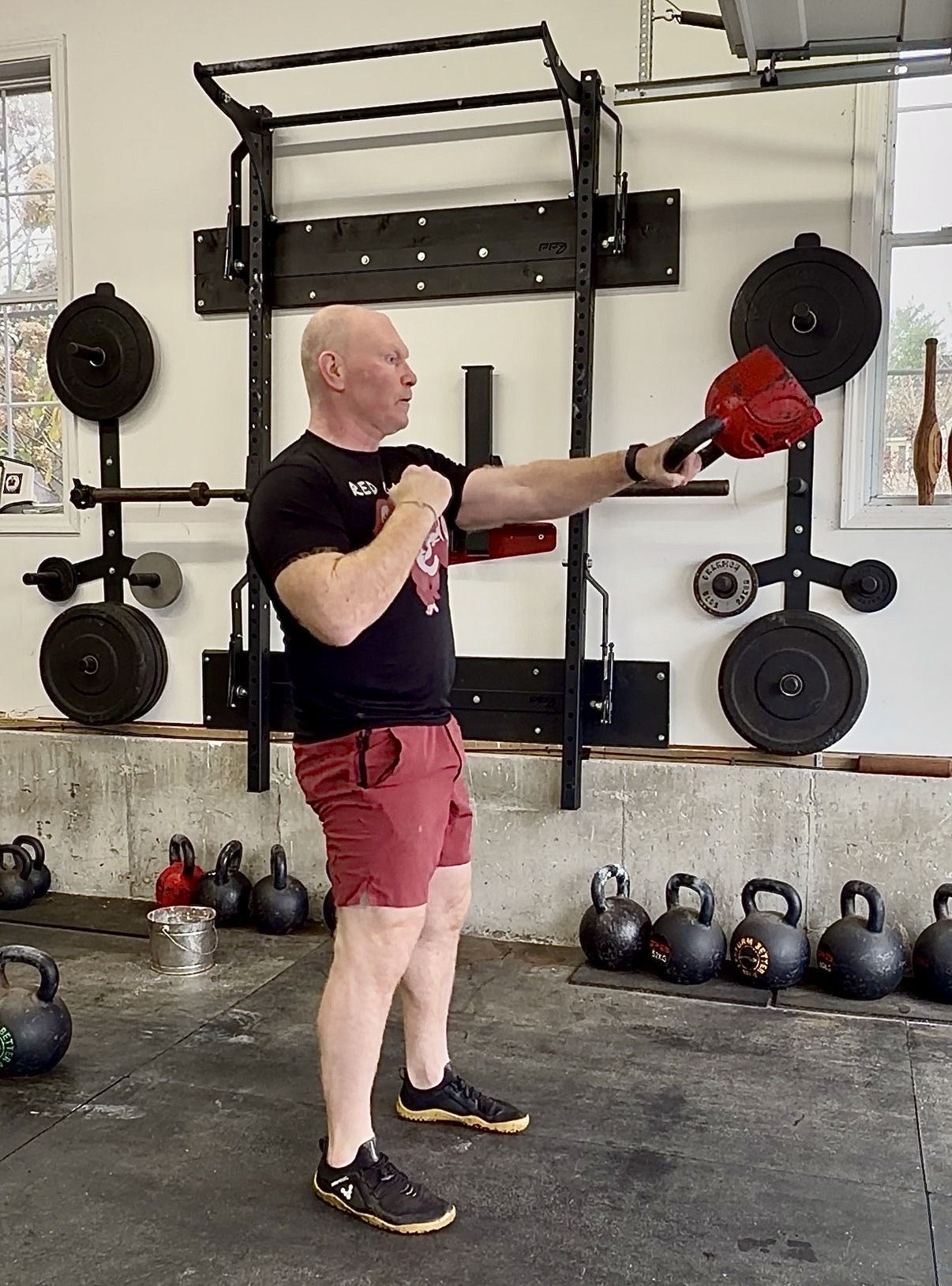
10 swings every minute, on the minute, for ten minutes. That's 100 powerful hip hinges. Choose a kettlebell you can swing explosively with excellent technique. Complete the reps and rest for the remainder of the minute. Beginners should master the hinge first and reduce rounds or reps as needed.
3. The 10-Minute Bench Press Challenge
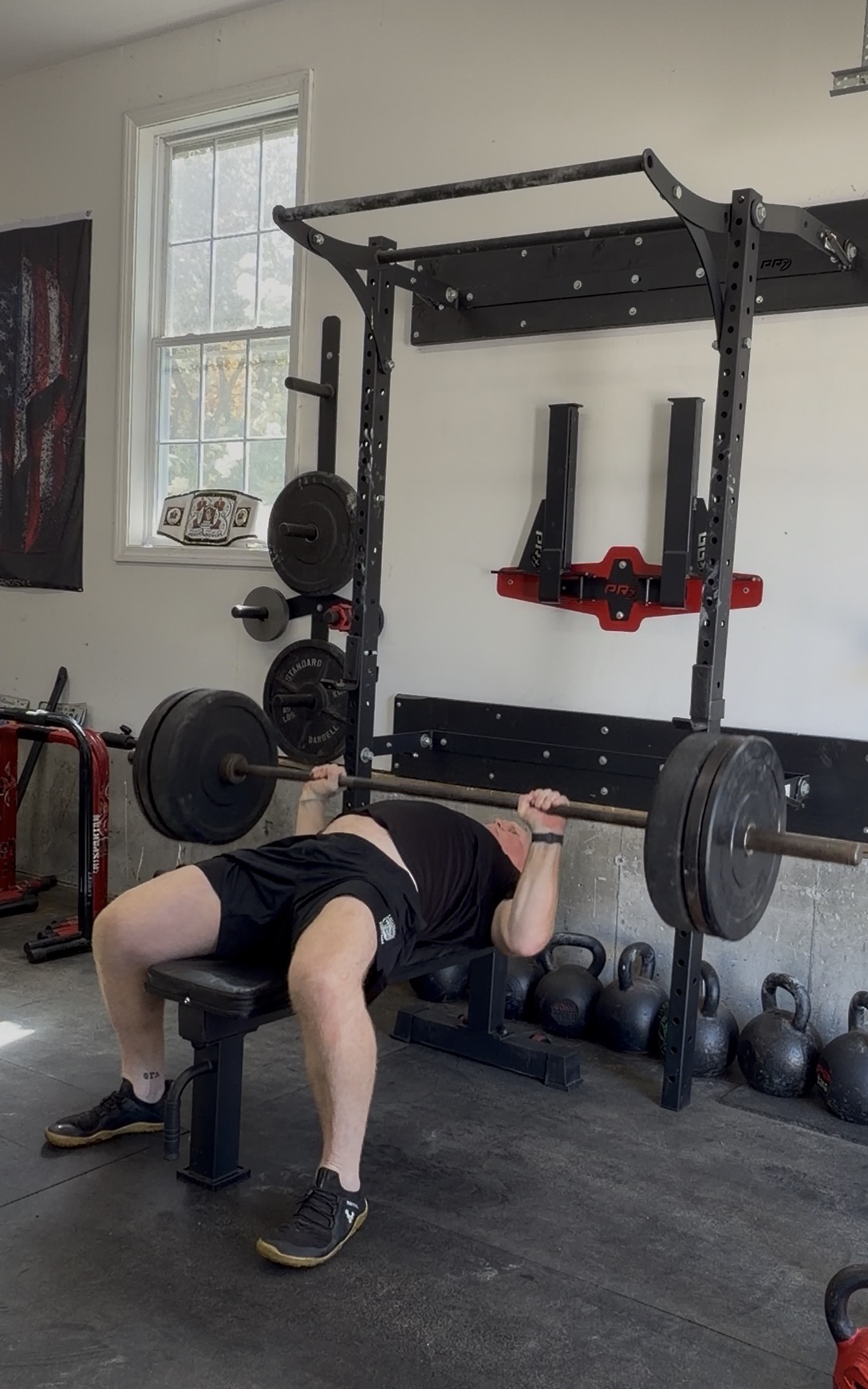
10 repetitions every minute, on the minute, for ten minutes. Our coaching benchmark is approximately 65–70% of bodyweight on the bar, but it's not a universal prescription. Scale to ability, use a spotter or safeties, and stop if technique deteriorates. Track your performance and work toward more quality reps or a slightly heavier load over time.
The Real Secret: Consistency Beats Occasional Heroics
I love a challenging workout. I've spent much of my life coaching athletes, competing, and pushing myself physically.
But not every day needs to be all-out. Some days you train hard. Some days you train briefly. Some days ten minutes of mobility or recovery work is exactly what you need.
Don't confuse consistency with going hard every day. Strength and power still require recovery. Learning when to push and when to back off helps you train for decades.
My Challenge to You: Give Yourself Ten Minutes
For the next 30 days, find ten minutes each day to invest in yourself. It might be strength training, kettlebells, bodyweight movements, mobility, or an intentional walk. Not every day has to be intense.
Track what you do and notice how those small decisions change your habits.
The transformation isn't necessarily what happens during one ten-minute workout. It's what happens when you stop waiting for the perfect opportunity and start using the opportunities you already have.
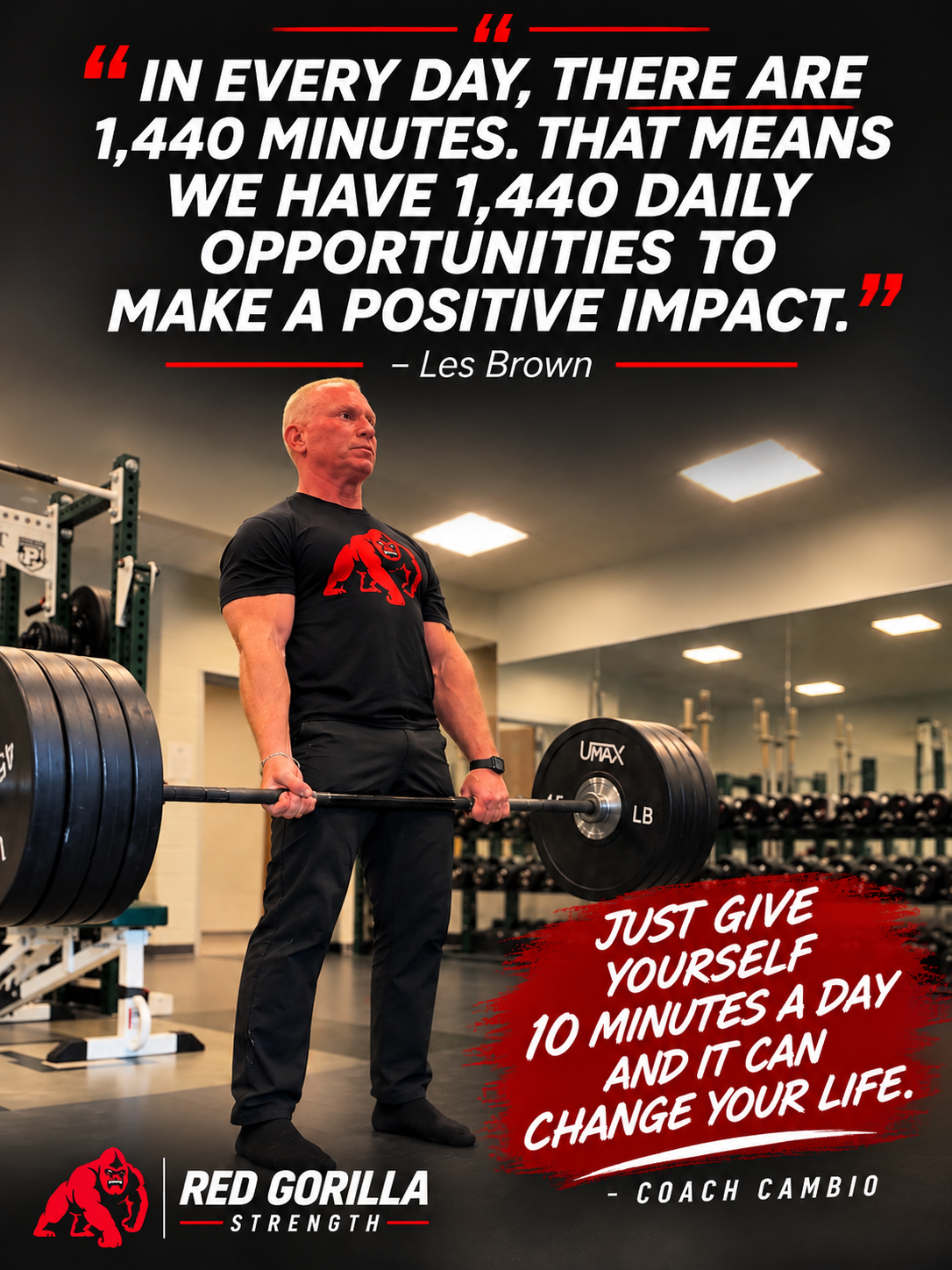
Just give yourself 10 minutes a day and it can change your life.
Want to put those ten minutes to work without having to plan your next session? My 10-Minute Strength Fix gives you ten ready-to-use workouts for busy days. Pick one, warm up, and get to work. The goal isn't perfection—it's building a habit you can keep.
— Coach Cambio
RED GORILLA STRENGTH — Don't just get older. Get stronger.
Research references
Ralston, G. W., et al. (2017). The Effect of Weekly Set Volume on Strength Gain: A Meta-Analysis. Sports Medicine.
Grgic, J., et al. (2018). Effect of Resistance Training Frequency on Gains in Muscular Strength: A Systematic Review and Meta-Analysis. Sports Medicine.